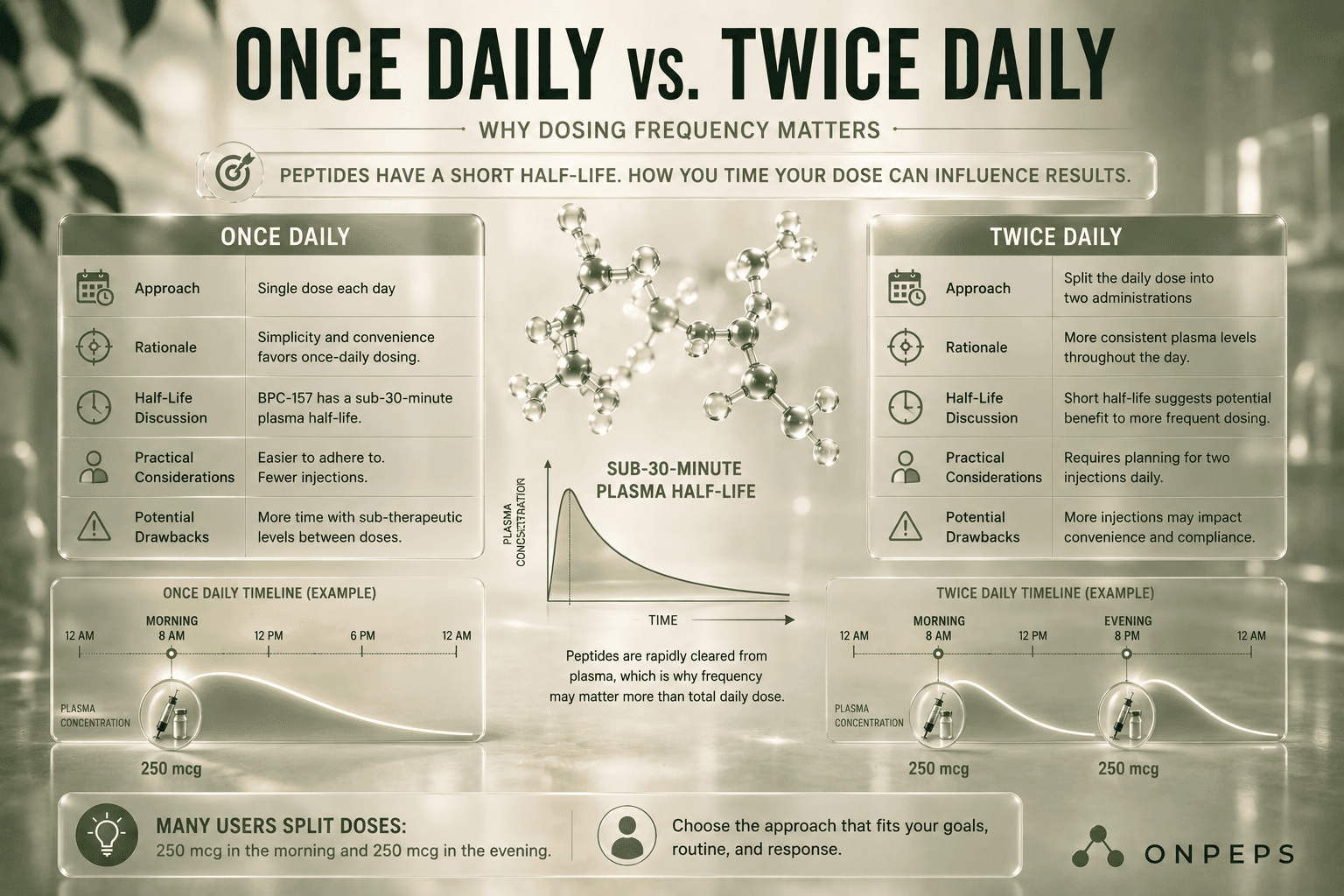
For acute tendon or ligament injuries, typical anecdotal protocols suggest 250mcg to 500mcg twice daily, often administered near the site of injury for localized effect, though systemic routes are also used

Bioregulator theory and mechanism Khavinson's bioregulator concept: Each organ produces specific regulatory peptides These peptides maintain tissue homeostasis With aging, peptide production declines Supplementing organ-specific peptides restores function Gene regulation is key mechanism How Cartalax works (theory): Enters cartilage cells (chondrocytes) Binds to specific DNA sequences Upregulates cartilage-protective genes Downregulates degradative genes Optimizes cartilage matrix production Gene expression changes: Upregulated (increased): Collagen Type II: Main cartilage structural protein Proteoglycans: Water-holding molecules Aggrecan: Cartilage compressive strength TGF-: Growth factors for cartilage Chondrocyte proliferation genes Downregulated (decreased): Matrix Metalloproteinases (MMPs): Cartilage-degrading enzymes Inflammatory cytokines: IL-1, TNF- Apoptosis genes: Prevents cartilage cell death Oxidative stress markers Mechanism comparison: Why bioregulation different: Works at DNA/gene level (root cause) Tissue-specific (only cartilage affected) Long-lasting effects (genes stay regulated) Cyclic dosing sufficient (vs continuous) Preventive and restorative Compare to other mechanisms and joint peptides
Kjaer 1987)
Think of it as a repair signal that may be layered on top of standard care, not a replacement
The amount of bacteriostatic water you add to your 5mg semaglutide vial directly determines three things: the concentration of the final solution in milligrams per milliliter, the volume you need to draw for each dose, and how easy or difficult it is to measure that volume accurately on your syringe
Hydrolyzed Quinoa:A natural protein that conditions, protects against breakage, and helps preserve hair color retention